Schröckenfux GesmbH
Grain, perennial or silage scythe – 45 cm scythe blade – 160 cm ashwood snath – Made in Austria
Grain, perennial or silage scythe – 45 cm scythe blade – 160 cm ashwood snath – Made in Austria
Regular price
€142,43 EUR
Regular price
€189,90 EUR
Sale price
€142,43 EUR
Taxes included.
Shipping calculated at checkout.
Schröckenfux GesmbH
SKU:4BDSFP010045P631860
Versandgewicht: 2.1 kg
Lieferzeit: 11 - 13 Tage
Quantity
Couldn't load pickup availability
Click here for your statutory warranty rights
The scythe—a traditional farming tool for mowing grass, grain or small bushes—is ideal for creating a natural garden teeming with insects. After flowering, the meadow is mown mechanically and left to dry. The resulting hay can be used as animal feed or fertilizer. One great side effect of mowing by hand is that many more flower seeds fall to the ground, guaranteeing a profusion of blooms the following year.
Dimensions
Weight
Package contents
1 scythe blade
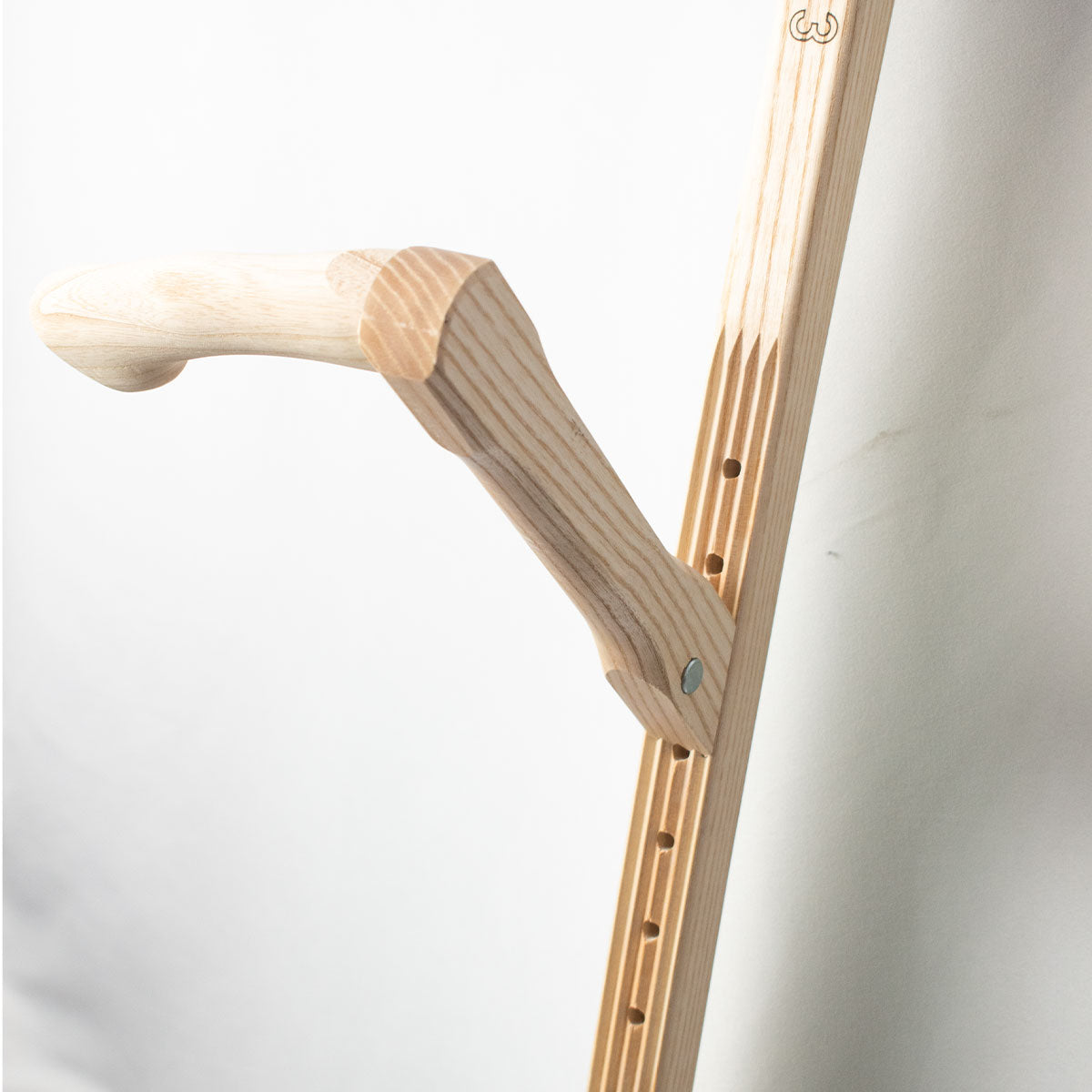
1 ash-wood scythe snath with height-adjustable grips
1 scythe ring
1 Allen key for the scythe ring
1 assembly / instruction manual
Mowing technique
Stand facing the path to be mown, with your feet about shoulder-width apart. Using your torso and arms, guide the scythe blade in a sweeping, arcing motion close to the ground, moving briskly and without using excessive force. Chopping or tearing motions are often signs that the scythe is not sharp enough.
Sharpness
The scythe blade must be maintained regularly. This means sharpening it at short intervals with a damp whetstone (kept in a water-filled holder), as well as hardening the cutting edge by peening it. On a flat anvil, use a peening hammer to hammer out the blade from the heel to the tip and back again. This thins and hardens the cutting edge, while also sharpening it and significantly extending its edge life. Edge life is the amount of time you can work without interruption before signs of wear appear. This method of reshaping can also remove notches up to about 5 millimeters deep from the cutting edge.
Adjusting the scythe
Correctly adjusting and mounting the blade on the snath, and setting it to suit the height of the person mowing, is very important. The angle between the blade’s longitudinal axis and the snath, together with the correct cutting height (5 to 10 mm above the ground), ensures a perfect mowing action.

- Scythe for mowing meadows, perennials or silage
- 45 cm scythe blade made from high-quality special steel
- Ergonomic ash-wood scythe snath (handle)
- Height-adjustable wooden grips
- For people approx. 170–185 cm tall
- Includes whetstone
- Made in Austria
Warning: For ages 18 and up! This product contains sharp tools or blades and is therefore not intended for anyone below the legal minimum age. These tools must be handled with particular care and expertise.
The high-quality special-steel scythe blade for mowing meadows, perennials or silage is hand-forged in up to 20 steps at one of the last scythe forges in Central Europe, in Austria’s Kremstal valley, and is peened ready for use. The blade has a slight upward curve toward the tip, allowing it to glide cleanly through the grass with a swinging motion and preventing it from catching in the ground. The snath is made from carefully selected ash and expertly crafted by hand. The ash snath is curved and comes to a point. The screw-on wooden grips can be adjusted along the snath to suit the user’s arm length, and the blade is secured with the scythe ring. The blade cuts as it moves from right to left, so it is designed for right-handed users. The ergonomically shaped ash-wood snath, with its two adjustable wooden grips, is used to guide the scythe.Dimensions
- W 58 x D 29 x H 164 cm
- Cutting width 45 cm
Weight
- 1.9 kg
Package contents
1 scythe blade
1 ash-wood scythe snath with height-adjustable grips
1 scythe ring
1 Allen key for the scythe ring
1 assembly / instruction manual
Mowing technique
Stand facing the path to be mown, with your feet about shoulder-width apart. Using your torso and arms, guide the scythe blade in a sweeping, arcing motion close to the ground, moving briskly and without using excessive force. Chopping or tearing motions are often signs that the scythe is not sharp enough.
Sharpness
The scythe blade must be maintained regularly. This means sharpening it at short intervals with a damp whetstone (kept in a water-filled holder), as well as hardening the cutting edge by peening it. On a flat anvil, use a peening hammer to hammer out the blade from the heel to the tip and back again. This thins and hardens the cutting edge, while also sharpening it and significantly extending its edge life. Edge life is the amount of time you can work without interruption before signs of wear appear. This method of reshaping can also remove notches up to about 5 millimeters deep from the cutting edge.
Adjusting the scythe
Correctly adjusting and mounting the blade on the snath, and setting it to suit the height of the person mowing, is very important. The angle between the blade’s longitudinal axis and the snath, together with the correct cutting height (5 to 10 mm above the ground), ensures a perfect mowing action.